Mahesh Medical
Can disposable gloves protect against household chemicals? Sometimes, but the answer depends on the glove material and the product. A pair of thin gloves may help keep splashes of dish soap or diluted cleaner off your hands. It may not provide reliable protection from concentrated cleaners, solvents, or prolonged contact. “Disposable” describes how gloves are used, not what chemicals they resist. That distinction is easy to miss.
Nitrile, latex, and vinyl gloves do not perform alike, and even gloves made from the same material can vary in thickness and quality. Chemicals may pass through a glove without visible damage, or weaken it over time. Check the product label and the glove manufacturer’s chemical-compatibility guidance before use; where available, consult the product’s safety data sheet. Pay attention to the exact chemical, its concentration, and the expected contact time. A quick splash is different from soaking.
Fit matters, too. A torn cuff, loose fingertip, or glove pulled over a damp hand can undermine protection. Replace gloves if they rip, swell, become sticky, or change color, and wash your hands after removing them. Some details are inconvenient. Still, there is no single disposable glove that safely handles every household chemical. If guidance is unclear, avoid direct contact and follow the product label’s precautions rather than guessing.
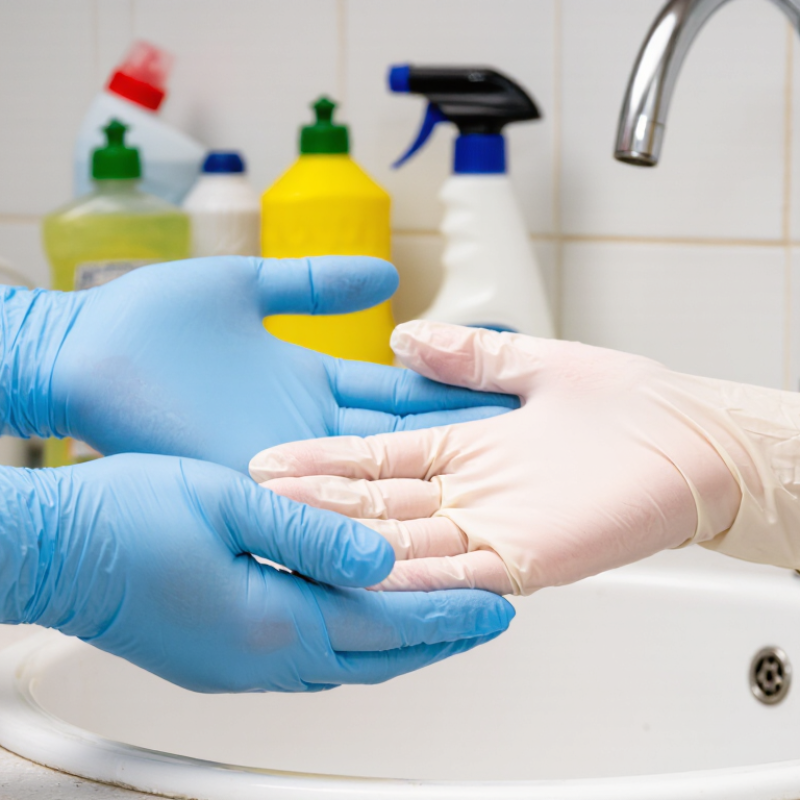
Disposable gloves differ in how they handle household chemicals. Nitrile often resists oils, greases, and many cleaning products better than thin vinyl. Still, “nitrile” does not mean protection from every formula. Strong solvents can pass through or damage it, especially during prolonged contact. Check the glove’s chemical-resistance guidance and follow the product label.
Latex gloves stretch well and allow nimble finger movements, useful when wiping a small, awkward surface. But some people develop latex allergies, and latex may not suit certain chemicals.
Vinyl gloves are generally less flexible and can tear more easily; they may work for brief, low-risk tasks, but are a poor choice for harsh cleaners.
Polyethylene gloves are loose and easy to change, yet their fit and barrier performance are limited. A splash can find its way inside.
Not ideal.
Thickness, contact time, and the chemical mixture all matter. A quick wipe with diluted dish soap is different from soaking a glove in concentrated drain cleaner. I used to think a glove was either “safe” or “not safe”; that was too simple. Even a compatible disposable glove should be replaced if it becomes torn, sticky, swollen, or contaminated inside. Keep cuffs clear of drips, and remove gloves without touching their dirty outer surfaces. When guidance is unclear, choose a different cleaning method rather than guessing.
Disposable gloves are not universal chemical barriers. A glove may look intact while certain chemicals pass through its material or weaken it. The result depends on the chemical, its concentration, contact time, and glove thickness. Nitrile, latex, and vinyl can each behave differently. Even two gloves made from the same material may vary. Check the product’s chemical-resistance information and the cleaner’s safety instructions before use. If those details are unclear, do not assume a disposable glove is suitable.
Bleach solutions, detergents, and solvents do not interact with glove materials in the same way. Some solvents can swell or soften certain plastics; prolonged exposure may increase the chance of chemical penetration. Tears are not the only concern. A glove can lose protective performance without an obvious hole. I have found this easy to overlook during quick cleaning jobs. It is also worth remembering that “waterproof” does not mean “resistant to every chemical.”
Tips: Match the glove material to the specific chemical, not just the task. Replace gloves if they become sticky, swollen, discolored, or damaged. Keep splashes away from wrists, and wash hands after removal. For strong or unfamiliar products, follow the label and safety data sheet; a disposable glove may not provide enough protection.
Disposable gloves can help with routine cleaning, but “disposable” does not mean suitable for every product. Check the cleaner’s label for glove recommendations and contact-time warnings. For diluted dish soap or mild surface cleaners, intact household gloves may be enough. A splash of diluted bleach is different from soaking your hands in it. Keep contact brief, and follow the product directions.
Material matters. Nitrile gloves resist many oils and some household cleaners, but they are not proof against every solvent or concentrated chemical. Latex can fit closely, yet some people develop skin reactions. Thin vinyl gloves may tear more easily during scrubbing. If a label names a specific material, follow that guidance; when it gives none, consult the safety information or choose reusable chemical-resistant gloves for tougher jobs. Check for pinholes, especially around the fingertips. Replace a glove that tears or gets cleaner inside it. Small detail, big difference.
Fit is easy to overlook. Gloves that bunch at the fingertips can snag on a sponge, while tight cuffs may split when pulled over damp hands. I have underestimated that before. Remove gloves without touching their dirty outer surface, then wash and dry your hands. For an unfamiliar product, test neither your skin nor a random glove: pause, read the label, and use ventilation as directed.
Disposable gloves can help during household cleaning, but “disposable” does not mean suitable for every chemical. Check the product label and glove packaging for material compatibility and recommended contact time. A thin glove may tear or allow some substances through. If the label gives no clear guidance, avoid direct contact and choose another safe method. Keep gloves intact and dry; replace them if they split, become sticky, or feel unusually warm. Small warning signs matter.
Removal deserves care. Pinch the outside of one glove near the wrist, then peel it away inside out without snapping it. Hold it in the still-gloved hand. Slide bare fingers under the remaining cuff and peel that glove over the first. It takes practice. Don’t touch your face, phone, or clean faucet handles with contaminated gloves. Put used gloves in a lined household bin unless the product label says otherwise, then wash your hands with soap and water. Gloves can create a false sense of safety; even careful removal is not perfect, and I would not treat it as a substitute for reading directions or cleaning up spills promptly.
Disposable gloves can reduce skin contact, but no single glove protects against every household chemical. The chart shows approximate pH ranges: acidic and alkaline products may irritate or burn skin, while pH alone does not determine glove compatibility. Always check the product label and Safety Data Sheet, use the recommended glove material, and replace gloves immediately if they tear, leak, or become contaminated.
For safer removal, pinch the outside near the wrist, peel the glove away from the hand, hold the removed glove in the gloved hand, slide an ungloved finger under the remaining cuff, and peel it off inside out. Dispose of contaminated gloves according to local waste rules, wash hands afterward, and never reuse disposable gloves unless the product instructions specifically allow it.
Typical household-product pH ranges; actual values vary with concentration and formulation.
Disposable gloves can help during brief, low-risk cleaning tasks, but they are not universal chemical protection. Their material may resist one substance and fail quickly against another. A glove can look intact while chemicals pass through its microscopic structure.
In practice, thin disposable gloves often suit diluted cleaners and short contact times. They are not enough for concentrated solutions, strong solvents, prolonged contact, or immersion.
Check the product’s safety data sheet and the glove manufacturer’s chemical-resistance chart before starting. Look for breakthrough time, not just material names. “Nitrile” or “vinyl” alone does not prove protection.
Small details matter. Replace gloves immediately after a splash, tear, or contamination. Do not touch door handles, phones, or clean containers with used gloves. Wear suitable eye protection, keep ventilation active, and choose longer cuffs when splashing is possible.
I used to think thicker gloves were automatically safer. That assumption was too simple. Thickness can improve durability, yet poor material compatibility still creates risk.
If the chemical is unidentified, pause and obtain reliable guidance rather than testing it on the glove. Keep the safety data sheet nearby, because memory becomes unreliable around fumes, spills, and rushed cleaning.
No. Their material may resist one cleaner but fail against another. Check the product label before starting.
Intact household gloves may be enough for brief use. Follow the cleaner’s directions and contact-time warnings.
They may not. Avoid relying on them for concentrated solutions, strong solvents, prolonged contact, or immersion.
No. Nitrile resists many oils and some cleaners, but not every solvent or concentrated chemical.
Read the label and safety information. Check the glove’s chemical-resistance chart and breakthrough time. Don’t guess.
Replace them after a tear, splash, or contamination. Check fingertips for pinholes, too.
Not necessarily. I once assumed thicker meant safer. Material compatibility still matters.
Avoid touching the dirty outer surface. Wash and dry your hands afterward. Small detail, big difference.
Can disposable gloves protect against household chemicals? The answer depends on the glove material, thickness, chemical type, concentration, and contact time. Disposable gloves made from different materials offer different levels of resistance: some work well for light cleaning tasks, while others may weaken, swell, or allow chemicals to pass through. Understanding how cleaning products interact with glove materials is essential when choosing protection for detergents, disinfectants, degreasers, and other common household substances.
For safer use, select gloves according to the product label and intended task, inspect them for tears, avoid touching clean surfaces with contaminated gloves, and remove and dispose of them carefully. Gloves should never be reused unless specifically designed for that purpose. Disposable gloves are not always enough, especially when handling concentrated chemicals, prolonged exposure, splashing hazards, or products that release irritating fumes. In these situations, stronger chemical-resistant gloves, eye protection, ventilation, and other appropriate safety measures may be necessary.
