Mahesh Medical Mahesh Medical

China Best Can You Use Nitrile Gloves for Hot Food?

Time:2026-11-06 Author:Isabella
0%

Can you use nitrile gloves for handling hot food? The short answer is: sometimes, but not as heat protection. Nitrile gloves are commonly used for food handling, yet ordinary disposable gloves are not designed to shield hands from hot pans, steam, or prolonged contact with hot surfaces. The glove may feel intact while heat still reaches your skin. That detail matters.

Food-safety specialist Dr. Ben Chapman of North Carolina State University has discussed how gloves can support safe food handling when they are used and changed properly. A careful paraphrase of that guidance is: “Gloves help reduce contamination only when handlers use them correctly and change them when needed.” This is not a direct quotation about hot food; it reflects the broader food-safety principle behind glove use. It is worth being precise here.

For a warm sandwich or a briefly handled cooked item, suitable food-grade nitrile gloves may be practical, if their packaging allows that use. But a tray fresh from the oven is different. Check the product’s temperature limits, follow its instructions, and never assume “nitrile” means heat-resistant. Use tongs or suitable heat-resistant gloves for hot cookware and steam. Change disposable gloves after touching raw ingredients, dirty surfaces, or anything that could contaminate ready-to-eat food. Then wash your hands as appropriate. Small steps. Easy to miss. Temperature, contact time, and the specific glove all matter, so one simple yes-or-no answer can be misleading.
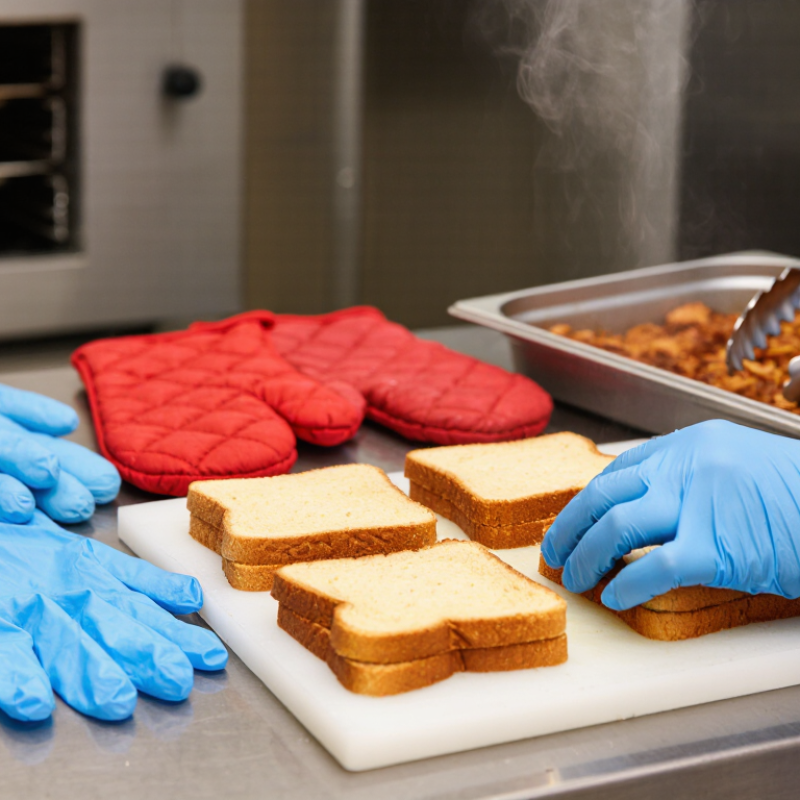
China Best Can You Use Nitrile Gloves for Hot Food?

What Nitrile Gloves Are and How They Respond to Heat

Nitrile gloves are made from synthetic rubber, not woven insulation. Their thin, flexible film helps keep hands clean during food preparation, but it does not make them heat-resistant. When a gloved hand touches a steaming bun or a hot pan, heat can pass through quickly. The glove may feel intact while the skin underneath is already uncomfortable. Thin gloves warm quickly.

The key distinction is between chemical or food-contact suitability and protection from heat. ASTM D6319 specifies requirements for nitrile examination gloves; it does not provide a contact-heat rating. EN 407:2020 rates contact-heat performance at 100°C, 250°C, 350°C, and 500°C, with each level requiring at least 15 seconds before the wearer reaches a defined temperature rise. A disposable nitrile glove should not be assumed to meet those tests.

For hot food, use utensils or purpose-made thermal gloves rated for the task, and follow their temperature limits. A glove suitable for serving a warm sandwich may not protect against a tray fresh from an oven. Check the product’s food-contact guidance, too. Heat tolerance varies by glove thickness and construction, so a brief touch is not a reliable test. That is easy to overlook.

Can You Use Nitrile Gloves for Hot Food?

Food-temperature benchmarks are not nitrile-glove heat ratings. Disposable nitrile gloves have no universal temperature limit and should not be relied on to protect hands from heat.

How to read this chart: The bars show food and water temperature benchmarks, not safe glove-use temperatures. Use only gloves labeled for food contact, follow their instructions, and use heat-resistant gloves or utensils for hot cookware and high-temperature handling. FDA Food Code benchmarks shown: cold holding at 5°C (41°F) or below, hot holding at 57°C (135°F) or above, and reheating food for hot holding to 74°C (165°F) for 15 seconds.

Food-Contact Requirements for Nitrile Gloves in China

China Best Can You Use Nitrile Gloves for Hot Food?

Food-Contact Requirements for Nitrile Gloves in China

Nitrile gloves are not automatically suitable for handling food in China. The key question is whether the finished glove meets applicable food-contact requirements, not simply whether it is made from nitrile. For rubber food-contact articles, GB 4806.11 is an important standard; general food-contact requirements also apply. Check current rules and the supplier’s compliance documents for the product’s specific material and intended use.

In practice, ask for evidence that the gloves have been tested for food contact, including relevant migration and sensory requirements. Confirm the documented conditions of use: temperature, contact time, and food type. Hot, oily foods can present different challenges from briefly handling cool, dry ingredients. A glove tested for limited contact may not be suitable for gripping steaming fried food for several minutes. Not automatically safe. Check the label and technical documents.

Also inspect the glove for tears, powder, or strong odors before use, and replace it if damaged or contaminated. I would not treat a “nitrile” label or bright blue color as proof of compliance. That is an easy assumption to make, but the paperwork and stated use conditions matter more. When those details are unclear, choose gloves explicitly documented for the intended food-contact conditions.

Temperature Limits for Handling Hot Food

Can You Use Nitrile Gloves for Hot Food?
Temperature Limits for Handling Hot Food

Nitrile gloves can be useful for brief food-handling tasks, but they are not heat-resistant gloves. Their safe temperature range varies by material, thickness, and manufacturer. There is no single temperature limit that applies to every pair. A glove may feel comfortable at first, yet heat can weaken it over time. Fit matters, too: a loose glove can let hot liquid reach the skin.

Avoid using disposable nitrile gloves to lift hot pans, handle food straight from hot oil, or work near steam. These tasks can expose hands to heat quickly, and the glove does not provide reliable insulation. Use tongs or utensils for hot items, and choose heat-rated protective gloves when direct contact is necessary. Check the glove’s product information for food-handling suitability and any stated temperature limits. When in doubt, don’t use it for hot contact.

Tips: Keep nitrile gloves for brief, cool-to-warm handling. Change them if they tear, feel unusually warm, or become contaminated. Be careful with hot liquids; a small spill can travel inside a glove. I might once have treated “warm to the touch” as a safe test, but it isn’t a dependable measure.

How to Choose Nitrile Gloves for Food Preparation

Choosing nitrile gloves for food preparation starts with the package. Look for gloves specifically labeled for food contact, and follow the manufacturer’s use instructions. Nitrile alone does not guarantee that a glove is suitable for food. Check that the size fits snugly; loose fingertips make it harder to grip a wet tomato or pick out a fish bone. Powder-free gloves can also help avoid unwanted residue.

Think about the task. Thinner gloves often allow better touch for slicing vegetables, while sturdier gloves may suit messier prep. Neither type replaces handwashing. Wash hands before putting gloves on, and change gloves after handling raw meat, touching a phone, or switching to ready-to-eat foods. Change them if they tear or become visibly dirty. Small habits matter.

For hot food, be cautious. Disposable nitrile gloves are not designed to protect hands from hot pans, steam, or boiling liquids. Use suitable heat-resistant tools for those jobs, and check the glove instructions before brief contact with warm food. The confusing part is that “food-safe” does not mean “heat-safe.” It is easy to miss that distinction during a busy service.

Safe Practices for High-Temperature Food Handling

China Best Can You Use Nitrile Gloves for Hot Food?

Nitrile gloves can help keep ready-to-eat food clean, but they are not heat-protection gear. A quick touch with warm food may be acceptable if the glove’s instructions allow it. Hot trays, steaming liquids, and freshly cooked food can expose hands to heat and damage gloves. They are not oven mitts.

Check the package for food-contact approval and any temperature limits. If the guidance is unclear, do not use the gloves to handle very hot food directly. Use clean tongs, a spatula, or heat-rated kitchen gloves instead. Watch for tears, loose cuffs, or softened material. Replace damaged gloves at once.

Good habits matter. Wash and dry hands before putting gloves on, and change them between raw and ready-to-eat tasks. Gloves can spread contamination just like hands. In a busy kitchen, it is easy to forget that after moving a hot pan. Pause and check. For warm food, follow the glove maker’s instructions and keep contact brief; for high heat, choose a tool designed for the job. The right choice depends on the food, contact time, and glove specifications.

FAQS

Are disposable nitrile gloves heat-resistant?

No. Nitrile is a thin synthetic rubber film, not insulation. Steam or a hot pan can transfer heat quickly. Thin gloves warm fast.

Can I use nitrile gloves to handle hot food?

Only for brief contact when the product documents allow it. They may suit a warm sandwich, but not a tray fresh from an oven. Use tongs.

Is there one safe temperature limit for all nitrile gloves?

No. Limits vary with thickness, construction, and manufacturer. A glove may feel fine at first, then weaken. I once thought comfort was enough. It wasn’t.

Do food-contact gloves automatically protect against heat?

No. Food-contact suitability and heat protection are different. ASTM D6319 covers examination glove requirements, not contact-heat ratings. That distinction matters.

What should I check before using nitrile gloves with food in China?

Check current food-contact requirements and product documents. GB 4806.11 is relevant to rubber food-contact articles. Confirm the food type, temperature, and contact time.

Can I grip steaming fried food for several minutes?

Don’t assume so. A glove tested for limited contact may not suit prolonged contact with hot, oily food. Check its stated conditions.

What should I use for pans, steam, or hot oil?

Use utensils for hot items. For direct contact, choose thermal gloves rated for the task. Follow their temperature limits. No guesswork.

When should I replace a nitrile glove?

Replace it if torn, contaminated, or unusually warm, or if hot liquid gets inside. Check for powder or strong odors before use. Color proves nothing.

Conclusion

Nitrile gloves are made from synthetic rubber and can provide a comfortable barrier during food preparation, but they are not designed to protect hands from heat. Their ability to withstand warmth varies by product, and high temperatures can weaken the material or cause discomfort. If you are asking, “can you use nitrile gloves for handling hot food,” the answer depends on the food’s temperature and the glove’s stated limits. Ordinary disposable gloves should not be treated as heat-resistant equipment.

For food preparation in China, choose gloves clearly identified as suitable for food contact and follow the manufacturer’s instructions. Check the temperature guidance, fit, thickness, and intended use before handling warm ingredients. Change gloves when they are damaged or contaminated, and wash hands before putting on a fresh pair. For very hot food, hot cookware, or prolonged exposure to heat, use appropriate heat-resistant tools or protective gloves instead of relying on disposable nitrile gloves.

Isabella

Isabella

Isabella is a dedicated marketing professional with a sharp focus on driving brand growth and engagement through strategic content creation. With an extensive background in digital marketing, she combines her passion for storytelling with her keen understanding of industry trends to deliver......