Mahesh Medical
Choosing between powdered and powder-free gloves requires more than comparing box prices. It requires understanding the task, the wearer, and the environment. Many buyers still ask, “why are some disposable gloves powdered and others not?” The answer begins with manufacturing. Powder, often cornstarch, was traditionally added to help gloves slide onto damp hands. It can improve donning speed. However, it may also spread particles across clean surfaces and irritate sensitive skin.
Dr. Gerald McDonnell, an infection-prevention and sterilization specialist, has stated, “Powder is a manufacturing aid, not a safety feature.” That distinction matters. Powder-free gloves usually use polymer coatings or chlorination to improve donning. They leave fewer visible residues on stainless-steel benches, examination trays, and packaging materials. They are often the more practical choice for healthcare, food handling, laboratories, and clean manufacturing. Still, “powder-free” does not automatically mean safer for every situation. Glove material, thickness, chemical resistance, fit, and changing practices remain important.
A nitrile glove may resist many common chemicals, while vinyl may suit brief, low-risk contact. Latex can provide excellent elasticity, but natural rubber proteins may concern some users. The correct decision depends on exposure, dexterity, and contamination control. It also depends on whether workers can put gloves on without tearing them. That detail is easy to overlook.
There is no perfect glove. A glove that feels comfortable for ten minutes may become tiring after four hours. A cheaper option may require more frequent changes. This guide compares powdered and powder-free gloves through practical evidence, workplace experience, and recognized safety considerations, helping readers choose with fewer assumptions and better judgment.
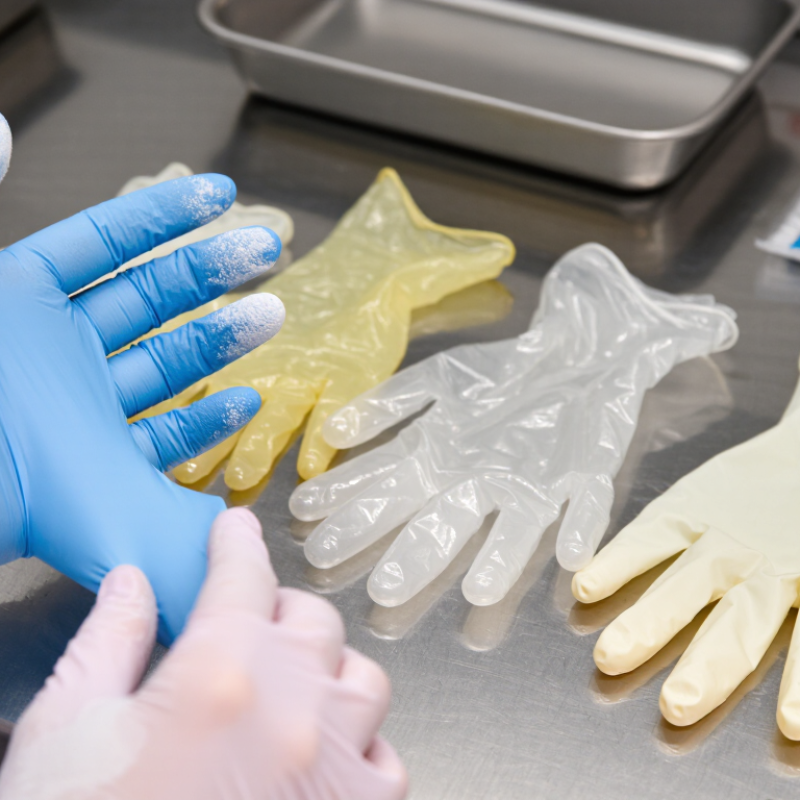
Powdered and powder-free gloves are not two different materials. They describe the glove’s inner finish. Powdered gloves usually contain cornstarch, which helps workers pull them on quickly. However, the powder can carry proteins into the air and irritate sensitive skin or airways. It may also contaminate wounds and equipment. In its 2016 Final Rule, the U.S. Food and Drug Administration identified these risks and prohibited powdered surgeon’s and patient-examination gloves from U.S. medical use in 2017.
Powder-free gloves remove this lubricant through washing, chlorination, or a polymer coating. They may feel slightly tighter at first. That detail matters during long procedures. The Centers for Disease Control and Prevention also emphasizes hand hygiene before and after glove use; gloves never replace it. A 2020 World Health Organization technical report on infection prevention describes gloves as one part of a broader protection system, not a complete barrier strategy.
Powder-free is not allergy-free. The National Institute for Occupational Safety and Health reports that glove-related skin problems can involve natural rubber proteins, accelerators, sweat, and repeated friction. A common mistake is choosing only by “powder-free” wording. Check the material, cuff length, thickness, tear resistance, and task exposure. For wet cleaning, a thicker glove may matter more than a softer texture. For precise examinations, fit often controls safety. The label still deserves skepticism. I used to treat powder-free as automatically safer; that view was too simple.
Powdered and powder-free gloves differ mainly in their inner coating. Powdered gloves often use a starch-based powder to reduce moisture and make donning easier. This can feel helpful during long shifts or when hands are slightly damp. However, the powder may become airborne, settle on nearby surfaces, or transfer to skin and materials.
Powder-free gloves remove that extra contamination concern. Their inner surface may be treated during manufacturing, making them easier to put on without loose powder. They are commonly preferred for medical examinations, laboratory work, food handling, and clean production areas. Powder-free does not mean chemical-proof, allergy-proof, or suitable for every task. Material selection still matters. Nitrile, latex, and vinyl offer different levels of stretch, touch sensitivity, and resistance.
In practical use, powdered gloves can save a few seconds. That benefit may disappear when powder irritates skin or interferes with testing. Powder-free gloves can feel tighter at first, especially in warm conditions. A poor fit causes tearing, reduced dexterity, and frequent replacement. No choice is perfect. The better decision depends on exposure risks, hand sensitivity, moisture, task duration, and workplace hygiene controls. Check product specifications, inspect gloves before use, and replace them after damage or contamination. A small fitting trial often reveals more than a product description.
Powdered gloves can be easier to put on when hands are damp. The powder reduces friction and saves time during frequent glove changes. This feels useful in busy cleaning or examination areas. However, powder can settle on tools, surfaces, and skin. It may also increase irritation for sensitive users. In controlled workspaces, even small residues can create problems. Powder is not always the convenient choice.
Powder-free gloves avoid these residues and usually suit food handling, medical tasks, laboratories, and clean production areas. Their surfaces may feel slightly tackier, especially after long wear. Some users need practice when pulling them over sweaty hands. That inconvenience is real. Manufacturing treatments can also affect texture, grip, and comfort, so “powder-free” does not guarantee a perfect fit. A glove that feels stiff may encourage workers to stretch it too far, causing tears. Check the material, thickness, size, and workplace requirements before choosing. Nitrile, latex, and vinyl each behave differently. Latex may offer strong elasticity, but some people cannot tolerate its proteins. Nitrile often provides a balanced grip, yet it can feel less flexible in delicate tasks. The best decision depends on contact hazards, wearing time, moisture, and required dexterity. Personally, I would not choose by price alone. A cheaper glove can cost more through frequent tearing and replacement. Fit matters most.
Different work environments demand different glove features. Powder-free gloves usually suit healthcare rooms, food preparation areas, laboratories, and clean manufacturing spaces. They leave less residue on surfaces and reduce the chance of powder transferring to products or equipment. Powdered gloves may feel easier to put on when hands are damp. However, powder can spread through the air and may irritate sensitive skin. The convenience is real, but it can create another problem.
In workshops, warehouses, or routine cleaning tasks, the best choice depends on the hazard, task length, and required grip. A glove should resist the chemicals, oils, or fluids involved. It should also fit closely without restricting movement. Loose fingers can reduce control around small tools. Tight gloves may cause fatigue during long shifts.
Material matters too. Nitrile, vinyl, and other materials offer different levels of flexibility and protection. Check the product’s technical data and workplace risk assessment before choosing.
Tips: Match gloves to the actual task, not just the job title. Test both types during a normal shift. Notice sweating, tearing, and reduced grip. Keep hands clean and dry before wearing gloves. Change them after contamination or damage. Powder-free gloves are often the safer default, but that is not universal. A rushed choice can look acceptable until residue appears on a work surface. Sometimes, the overlooked detail is the most important one.
The final glove selection should match the work, not only the product label. Powdered gloves may feel easier to put on when hands are dry and tasks are brief. However, powder can leave residue on tools, surfaces, or materials. It may also worsen skin discomfort for some users.
Powder-free gloves are usually the safer choice for clean handling, patient care, food contact, and controlled work areas. They reduce unwanted particles and help maintain a cleaner working environment. Still, powder-free does not automatically mean better. Check the glove material, thickness, stretch, grip, and resistance to the chemicals used in your task. A glove that tears during fitting offers little protection.
Fit matters greatly. Fingers should reach the tips without pressure, while the cuff should cover the wrist securely. Try several sizes during realistic work, including humid conditions and extended wear. Watch for sweating, stiffness, pinching, or reduced dexterity. A short trial can reveal problems that specifications miss.
Test before routine use. Ask workers to handle smooth tools, small parts, or wet objects. Review the manufacturer’s technical information and applicable workplace requirements. If skin irritation appears, stop using the gloves and seek qualified professional advice. I would also question familiar habits; a glove chosen for convenience may create more contamination or discomfort later. Consider both powdered and powder-free options, then document why the selected type fits the task.
| Selection Dimension |
Powdered Gloves Key Characteristics |
Powder-Free Gloves Key Characteristics |
Practical Selection Guidance |
|---|---|---|---|
| Powder composition | Usually contain a lubricating powder, commonly cornstarch, to make donning easier. | Are manufactured without intentionally added powder. The inner surface may be polymer-coated or chlorinated to improve donning. | Confirm the glove specification and product labeling rather than assuming that a colored or textured glove is powder-free. |
| Ease of donning | Generally easier to put on, especially when hands are damp or gloves must be changed frequently. | Can require more effort to don, although modern polymer coatings and surface treatments can provide good donning performance. | Choose powdered gloves only when the work environment permits them and frequent, rapid changes are a significant requirement. |
| Risk of powder contamination | Powder can become airborne or transfer to surfaces, instruments, products, and samples. | Minimize powder-related residue and airborne contamination when properly manufactured and handled. | Powder-free gloves are normally the safer choice for cleanrooms, laboratories, food handling, electronics, and precision assembly. |
| Skin sensitivity and irritation | Powder may absorb skin moisture and can contribute to dryness or irritation for some users. It can also carry glove proteins onto the skin or into the air when natural-rubber latex gloves are used. | Remove powder as a potential source of irritation, but the glove material, additives, and wearer sensitivity still need to be considered. | For sensitive users, select powder-free gloves and review the material and chemical formulation. A healthcare professional should assess suspected allergy symptoms. |
| Healthcare and patient-contact use | Generally unsuitable where powder could interfere with wound care, examinations, diagnostic procedures, or patient safety. | Preferred for most patient-contact and clinical applications because they reduce powder transfer and contamination concerns. | Follow applicable healthcare requirements and facility policies. Use sterile gloves when the procedure requires sterility; powder-free alone does not mean sterile. |
| Food handling | Powder may transfer to food and may be restricted or unsuitable under workplace procedures or local requirements. | Usually preferred because they reduce the chance of visible powder residue on food and food-contact surfaces. | Verify food-contact suitability, local regulations, and the glove manufacturer’s declaration before use. |
| Cleanroom and laboratory work | Powder can compromise cleanliness controls and interfere with sensitive processes or testing. | Better suited to controlled environments, subject to cleanliness classification, particle limits, packaging, and validation requirements. | Select gloves that are specifically processed, packaged, and tested for the required cleanroom or laboratory conditions. |
| Chemical handling | Powder does not determine chemical resistance. The glove material, thickness, permeation, degradation, and breakthrough data are the critical factors. | Powder-free status also does not guarantee chemical protection. Performance depends on the specific chemical and exposure conditions. | Consult chemical-resistance data and select a glove based on the chemical, concentration, temperature, contact time, and required dexterity. |
| Tactile sensitivity and grip | Powder generally has little direct effect on tactile sensitivity, but loose powder can affect grip or leave residue on surfaces. | Often provides a cleaner working surface. Grip performance depends mainly on the glove material, thickness, and external texture. | Evaluate sample gloves under actual wet, dry, oily, or dusty working conditions instead of selecting by powder status alone. |
| Surface and product cleanliness | May leave visible or microscopic residue on equipment, components, packaging, and finished products. | Reduces powder residue, although gloves can still transfer skin oils, chemicals, particles, or other contaminants if not changed properly. | For contamination-sensitive work, use powder-free gloves together with hand hygiene, correct donning, regular changes, and controlled storage. |
| Regulatory and workplace policy | May be prohibited or restricted in specific applications because of contamination and worker-safety concerns. | Commonly specified where powder could create a safety, quality, or cleanliness problem. | Check applicable laws, standards, customer specifications, and internal procedures before finalizing the glove type. |
| Cost and total operating value | May have a lower purchase price or lower donning effort in some markets, but cleanup, contamination, and process risks can increase total cost. | May cost more per glove in some cases, but can reduce powder-related cleaning, rejects, and process interruptions. | Compare total cost of ownership, including glove consumption, labor, waste, cleaning, quality failures, and disposal. |
| Best general fit | Limited, non-critical tasks where powder is explicitly permitted and contamination is not a concern. | Healthcare, food handling, laboratories, clean manufacturing, electronics, precision work, and most contamination-sensitive applications. | When uncertain, powder-free is usually the more versatile default, provided the glove material and protection level match the task. |
| Final selection checklist | First identify the hazard and task: biological, chemical, mechanical, thermal, contamination-related, or a combination. Then verify glove material, size, thickness, cuff length, fit, dexterity, grip, barrier performance, relevant certifications, user sensitivity, and disposal requirements. Conduct a practical trial before purchasing in volume, and replace gloves immediately when torn, contaminated, or unsuitable for the exposure. | ||
Powdered gloves contain a starch-based inner coating. Powder-free gloves use a treated inner surface instead. The difference affects comfort, cleanliness, and contamination control.
Powder can reduce moisture and make gloves easier to put on. This helps during short tasks or slightly damp conditions. The benefit may be temporary.
Powder can become airborne and settle on nearby surfaces. It may transfer to skin, tools, or materials. Some users may also experience skin discomfort.
They suit patient care, food handling, laboratory work, and clean production. They help reduce unwanted particles in controlled areas. Cleaner handling matters.
No. Powder-free does not mean chemical-proof or allergy-proof. Material, thickness, and resistance must match the task. Check technical information before use.
Nitrile, latex, and vinyl provide different stretch, sensitivity, and resistance. Choose according to contact risks and handling needs. One material cannot suit everything.
Fingers should reach the tips without pressure. The cuff should cover the wrist securely. Try gloves during humid conditions and extended wear. Fit matters.
Ask workers to handle smooth tools, small parts, or wet objects. Watch for tearing, sweating, stiffness, pinching, or poor dexterity. A short trial can reveal overlooked problems.
Replace gloves after damage or contamination. A torn glove offers little protection. Change them when handling conditions require it. Familiar habits can be misleading.
Choosing between powdered and powder-free disposable gloves begins with understanding their design and intended use. Powdered gloves contain a light inner coating, often made from a starch-based material, to make them easier to put on and remove. Powder-free gloves are specially treated or finished to provide similar comfort without loose powder. This explains why are some disposable gloves powdered and others not: the choice usually depends on donning convenience, skin sensitivity, contamination control, and workplace requirements.
Powdered gloves may be practical for short, routine tasks where quick changes are important, but the powder can create mess, irritate sensitive skin, or interfere with clean processes. Powder-free gloves are generally preferred in healthcare, food handling, laboratories, manufacturing, and other environments where cleanliness and product protection matter. When making the final selection, consider the level of dexterity, durability, chemical resistance, user comfort, frequency of glove changes, and the risk of contamination. The best option is the one that balances performance, safety, comfort, and the specific demands of the working environment.
