Mahesh Medical
Rubber gloves protect hands during cleaning, food preparation, healthcare tasks, and many household jobs. But after a few minutes, warmth and trapped moisture can make fingers slippery and uncomfortable. The cause is often simple: gloves limit airflow, while your hands continue producing heat and sweat. Fit, glove thickness, room temperature, and task duration can all affect how damp your hands become. Small changes may help. Sometimes they do not.
This guide explains how to avoid sweating while wearing rubber gloves without compromising a suitable fit or the protection your task requires. It covers choosing breathable glove options when appropriate, starting with clean, fully dry hands, and taking safe breaks to remove and air out gloves. A thin liner may help for some jobs, but it must fit comfortably and remain compatible with the glove and task. Check the manufacturer’s instructions, especially when using gloves for medical, chemical, or food-related work. Never rely on a comfort tip to replace required protective equipment. If sweating stays heavy even when you are not wearing gloves, consider asking a healthcare professional for advice. One detail is easy to overlook: the best solution depends on what your gloves are meant to protect you from.
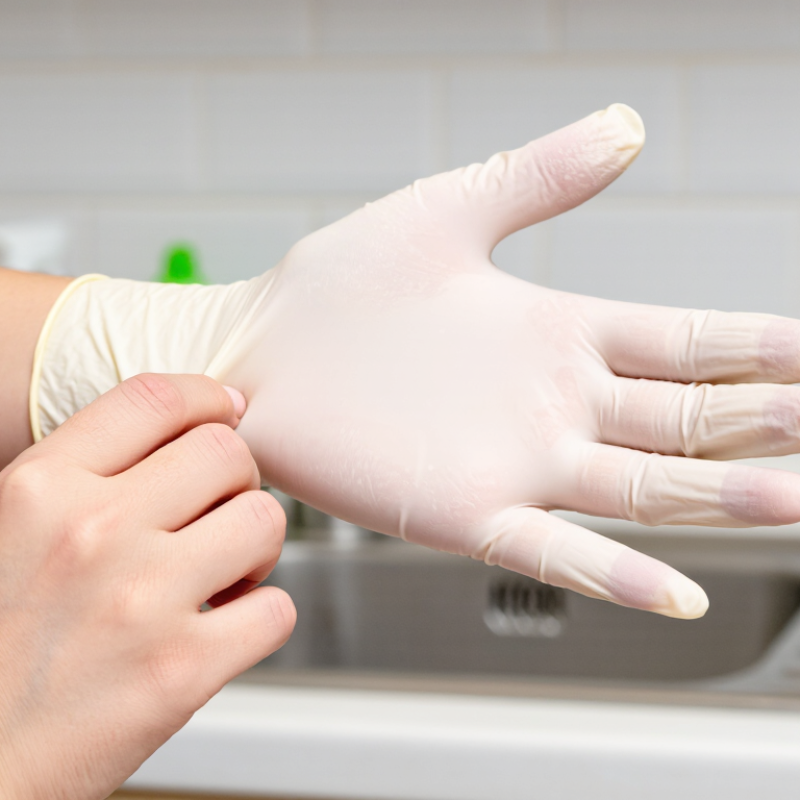
Palmar skin is unusually rich in eccrine glands; estimates often reach about 600 per square centimeter. That is a lot. These glands release watery sweat to help regulate temperature, but inside rubber gloves the moisture has nowhere to evaporate. A warm palm can quickly feel slick, and damp skin may rub more against the glove during repeated gripping.
Assess the pattern before changing your routine. Note when sweating starts, whether both palms are affected, and how damp the glove feels after ten or twenty minutes. Compare a cool room with a warm one, and record whether the problem appears during rest or only during active work. Small details matter. One observation is not a diagnosis, and gland-density figures vary between sources and individuals.
Wash hands when needed, then dry them carefully, especially between the fingers, before putting gloves on. If the task allows, brief glove breaks can give skin time to dry. A suitable liner may help absorb moisture, but it must not reduce grip, fit, or protection for the work being done. Avoid simply choosing a looser glove; poor fit can create friction and make handling less secure. If sweating is persistent, severe, or happens even when the hands are cool, a healthcare professional can help assess possible causes.
How to Keep Hands from Sweating in Rubber Gloves
Choose Glove Materials and Fit Under ISO 21420:2020 Requirements
Rubber gloves can trap heat and moisture, especially during long tasks. ISO 21420:2020 sets general requirements for protective gloves, including sizing, comfort, dexterity, and user information. It does not guarantee sweat-free hands or prescribe one material for every job. Check the glove’s size guidance and task-specific information before choosing a pair.
A well-fitting glove should let your fingers move without pulling at the seams or bunching at the fingertips. Too-tight gloves may feel warmer and restrict movement; loose ones can reduce grip. Material choice matters, but protection comes first. Match the glove to the task, and do not assume that a thinner glove is suitable for every hazard. Liners can help absorb sweat, though they may affect fit, grip, or protective performance. That detail is easy to overlook.
Tips: Start with clean, dry hands. Take safe breaks to remove gloves and let your hands air-dry. Change damp liners, and dry reusable gloves fully before wearing them again. If your hands still feel clammy, pause and check the fit. Small changes help, but comfort should never replace task-appropriate protection.
| Factor | Practical facts | Choice or practice to consider | Relation to ISO 21420:2020 |
|---|---|---|---|
| Glove material | Rubber and other continuous, non-porous coatings limit liquid contact but also restrict moisture-vapor escape compared with many uncoated textiles. Sweating can therefore occur during prolonged wear. | Choose a glove construction that provides the protection required for the task. Do not substitute a more breathable material unless it offers the necessary protection. | The standard sets general glove requirements; it does not specify a material that prevents sweating or a sweat-performance rating. |
| Fit and size | A glove that is too tight may feel restrictive, while excess material can reduce control and dexterity. Fit depends on both hand dimensions and glove design. | Use the size information supplied for the glove and check that fingers, palm, and cuff fit comfortably without impairing the required grip or movement. | ISO 21420:2020 includes general sizing and ergonomic requirements. It does not guarantee that one labeled size will fit every hand identically. |
| Cotton glove liners | A thin textile liner can absorb some perspiration and make a glove more comfortable, but it does not stop the hand from sweating. A liner can change the fit and dexterity. | Use a liner only when compatible with the task and glove instructions. Keep liners clean and dry, and replace them when damp. | Check that the glove still fits and performs as intended when worn with a liner; the standard does not make liners suitable for every protective application. |
| Wear time and breaks | Long periods in a non-porous glove can increase warmth and moisture inside it. Removing gloves briefly when it is safe allows hands to cool and dry. | Plan safe glove-change or drying breaks where the work procedure permits. Dry hands fully before putting on a clean, dry pair. | Break schedules are a workplace practice, not a sweat-control requirement specified by ISO 21420:2020. |
| Protection and compatibility | Resistance to chemicals depends on the glove material and the substance, concentration, temperature, and contact duration. A glove that feels cooler may not provide the needed barrier. | Verify chemical resistance and the relevant task-specific protective performance before changing glove type or adding a liner. | ISO 21420:2020 is a general requirements standard; specific protective hazards are addressed by applicable glove standards and product information. |
| Care and skin comfort | Damp gloves and liners can feel uncomfortable. Reuse, cleaning, and drying should follow the glove maker's instructions and workplace hygiene procedures. | Allow reusable gloves to dry as directed, and replace damaged gloves. If irritation persists, stop use where safe and seek appropriate workplace or medical advice. | The standard includes general requirements concerning innocuousness and user information; it does not guarantee that no wearer will experience irritation. |
A thin moisture-wicking liner can make rubber gloves feel less clammy, but it only helps while it stays dry. Choose a close-fitting liner that does not bunch at the fingertips or wrist. Put it on clean, dry hands, then wear the rubber glove over it. The liner absorbs sweat; the outer glove still provides the task-specific barrier. Check that the combination does not limit grip or make the glove too tight.
Replace the liner as soon as it feels damp, rather than waiting until it is soaked. OSHA guidance estimates that occupational skin disorders account for 10–15% of occupational disease cases, a reminder that hand comfort and skin condition deserve attention. This broad estimate does not prove that liners prevent skin problems, but managing trapped moisture is a sensible part of glove care. Keep spare liners nearby in a clean, dry container. Dry liner. Change it.
During a shift, pause in a safe place, remove the gloves, and check the liner and skin. If the liner is wet, change it; if hands are sweaty, let them dry before putting on a fresh pair. Follow workplace procedures for glove removal and hygiene, especially when handling chemicals or contaminated materials. The awkward part is remembering to check before discomfort starts. A simple change log can help, though it may feel fussy at first.
How to Keep Hands from Sweating in Rubber Gloves
Rotate Gloves and Allow Them to Dry Between Wear Periods
Sweat builds up when damp gloves stay on your hands or get reused before drying. Keep two pairs of reusable gloves in rotation. After each task, rinse them if needed, then turn them inside out carefully and let both surfaces air-dry completely. Hang them in a clean, ventilated spot, away from direct heat. A glove that feels dry outside may still be clammy inside. It takes extra time, but putting one damp pair back on can quickly undo the effort.
Tips: Dry your hands before putting gloves on. Use a clean, absorbent cotton liner for longer tasks, and let it dry between uses. Don’t share liners.
For reusable gloves, follow the care instructions and replace pairs that become cracked, sticky, or difficult to clean. If you use disposable gloves, don’t rotate or reuse them; change them between tasks and whenever they become wet inside. Choose a fit that allows your fingers to move without excess tightness. During a long chore, take a short break, remove the gloves, and let your hands cool and dry. This routine can feel fussy at first, and it won’t prevent every sweaty-hand episode, but regular drying often makes gloves more comfortable.
Rotate gloves and allow them to dry between wear periods.
Example rotation schedule: with 8-hour wear periods and pairs used in sequence, two pairs provide 8 hours between uses of each pair; three provide 16 hours. These are scheduling intervals, not a guarantee that gloves will be fully dry. Let gloves air-dry completely before reuse and follow the care instructions for your gloves.
Rubber gloves can turn a small task into a slippery one. Moisture inside the glove may make a coin, screw, or instrument harder to control. ISO 21420:2020 provides a practical way to compare glove dexterity, using a standardized pin-picking test. Its five performance levels correspond to pin diameters of 11, 9.5, 8, 6.5, and 5 millimetres; level 5 indicates the finest pickup ability. Small numbers, but useful.
For sweaty hands, treat that score as a starting point, not a promise. The ISO test measures dexterity under controlled conditions; it does not measure sweat, heat, or grip after an hour of work. Try the glove with the actual task: pick up a small screw, turn a tool, and handle a damp cloth. Note whether fingertips bunch or objects slide. A high score can still feel awkward.
Before work, dry your hands and choose a glove that fits without stretching at the fingertips. During longer tasks, take safe breaks to remove gloves and let hands dry, following workplace procedures. Change damp gloves when practical. Retest after a few minutes of real use. That part is easy to overlook. It is also where the neat laboratory score may stop matching your experience. ISO 21420:2020 is the technical reference; your task-specific check adds context.
It sets general requirements for protective gloves, including sizing, comfort, dexterity, and user information. It does not guarantee sweat-free hands.
Your fingers should move without seam tension or bunched fingertips. Tight gloves may feel warmer, while loose gloves can reduce grip.
A thin, close-fitting moisture-wicking liner can absorb sweat. Check that it does not bunch, reduce grip, or make the glove too tight.
Change it when it feels damp, not after it becomes soaked. Keep spare liners in a clean, dry container. Dry liner. Change it.
Not fully. The standardized test uses pin sizes from 11 to 5 millimetres. Level 5 indicates finer pickup ability, but the test does not measure sweat or heat.
Try picking up a small screw, turning a tool, and handling a damp cloth. Notice whether objects slide or fingertips bunch. Lab scores may not match your experience.
Take safe breaks, remove gloves, and let your hands air-dry. Change damp liners, and follow workplace procedures for glove removal and hygiene.
Dry them fully before wearing them again, and start with clean, dry hands. Small changes help. Comfort should not replace task-appropriate protection.
To understand how to avoid sweating while wearing rubber gloves, start by recognizing that palms have a high concentration of sweat-producing eccrine glands—about 600 per cm². Choose gloves with suitable materials and a fit that meets the relevant requirements of ISO 21420:2020, without being unnecessarily tight. For tasks that allow it, a thin moisture-wicking liner can help manage dampness; replace the liner when it becomes wet so it does not trap moisture against the skin.
During longer periods of use, rotate between gloves and let each pair dry fully between wear periods. This helps reduce lingering moisture and discomfort. Because liners and glove fit can affect hand control, check that you can still perform the task safely and comfortably. Use ISO 21420’s 1–5 dexterity performance scale as a reference when assessing whether a glove provides enough finger movement for the work.
