 Mahesh Medical
Mahesh Medical
Mahesh Medical
When clinicians ask, “why do medical gloves have textured fingertips,” the answer begins with control. Smooth latex or nitrile can become slippery around water, saline, blood, or disinfectant. Tiny raised patterns create more contact points between the glove and an instrument. That extra friction can help a nurse steady a needle, open a dressing, or hold a wet tube. It may also support finer movements during examination and laboratory work.
Dr. Gerald McDonnell, a glove-materials specialist and former Ansell chief scientific officer, has explained, “Textured fingertips are designed to improve grip, particularly when surfaces are wet.” His observation reflects practical glove engineering, not merely marketing language. Manufacturers adjust the pattern, depth, and coverage to balance grip with tactile sensitivity. Deeper texture may feel secure, but it can reduce the delicate sensation needed for palpation or instrument handling.
The design is useful. It is not magic. Glove fit, material quality, hand moisture, and correct sizing still affect performance. A loose glove can fold at the fingertips and weaken control, even with an aggressive texture. Some users may also find heavily textured surfaces less comfortable during long procedures. That limitation deserves attention. The best choice depends on the task, not on texture alone. This article examines the main reasons behind textured fingertips and considers where the feature helps, where it falls short, and why thoughtful selection matters in real clinical settings.
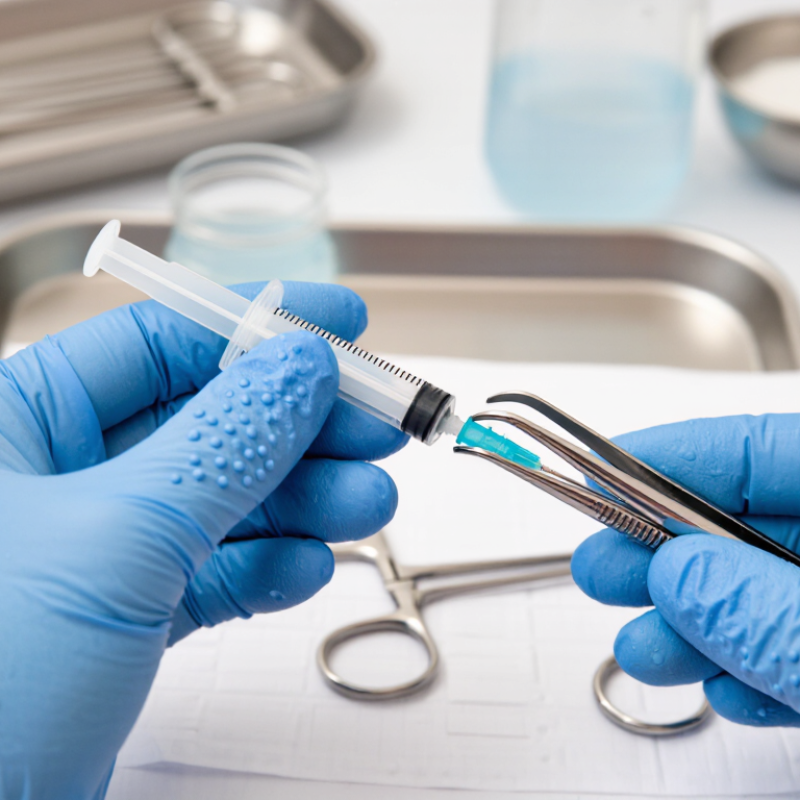
Textured fingertips help medical gloves maintain control when instruments become wet or dry. Small raised patterns create contact points between the glove and a metal handle. On dry instruments, these points increase friction and reduce unwanted sliding. This matters when adjusting a clamp, guiding a probe, or holding a small syringe.
Wet conditions are more demanding. Water, saline, or light lubricant can form a thin film between the glove and the instrument. A textured surface helps break up that film and gives moisture somewhere to move. The fingers can then keep steadier contact with the handle. Grip remains more predictable.
Fit also matters.
A glove with poor sizing may wrinkle at the fingertips, weakening control despite a good texture. In practical use, I notice the difference most during repeated movements, such as rotating a tool or passing an instrument. However, textured fingertips are not magic. Heavy fluid, excessive lubricant, or worn material can still reduce grip. Some textures may also slightly reduce fingertip sensitivity. That trade-off deserves attention during glove selection and clinical training. Staff should assess grip, tactile feedback, and comfort under realistic wet and dry conditions, rather than relying on appearance alone.
| Performance Dimension | Smooth Fingertips | Textured Fingertips | Practical Benefit |
|---|---|---|---|
| Dry instrument handling | A smooth polymer surface provides fewer physical contact points and may feel slippery during fine manipulation. | Raised micro-patterns increase surface contact points and help resist sliding. | More secure handling of forceps, clamps, syringes, and small components. |
| Wet instrument handling | Water or saline can form a continuous film between the glove and instrument, reducing friction. | Texture can interrupt the liquid film and create small drainage paths between contact areas. | Improved control when handling rinsed, disinfected, or bodily-fluid-wet instruments. |
| Oil, lotion, or gel exposure | Lubricating substances can make an uninterrupted smooth surface feel slick. | Patterned areas may preserve more mechanical interlocking than a completely smooth surface, although performance depends on the substance and glove material. | Better handling consistency in procedures involving gels, creams, or oily residues. |
| Fine motor control | Requires greater reliance on finger pressure when the contact surface is slippery. | Textured zones provide tactile feedback and help the fingertips maintain position. | Supports controlled movements during suturing, pipetting, dressing changes, and device adjustment. |
| Texture coverage | Usually has a uniform, low-profile surface across the finger area. | May use fingertip, finger-area, or full-palm texturing; fingertip texturing focuses grip where precision contact occurs. | Allows manufacturers to balance fingertip control with flexibility in the rest of the glove. |
| Texture design | Flat surfaces offer limited mechanical drainage or interlocking features. | Raised dots, micro-diamonds, hexagonal patterns, and other molded profiles increase surface irregularity. | The pattern can improve grip without requiring a separate coating or adhesive layer. |
| Glove material interaction | Grip is influenced by the polymer, thickness, surface finish, and the condition of the instrument. | Texture can enhance grip, but it does not remove the effects of material differences, contamination, or glove stretch. | Glove selection should consider both surface texture and the intended clinical task. |
| Safety and usability | A slippery surface may increase the need to reposition an instrument or apply extra finger force. | Improved contact stability can help reduce accidental drops and unnecessary hand adjustments. | Supports safer, more efficient handling, while correct glove size, replacement, and aseptic technique remain essential. |
Note: Actual grip performance varies with glove material, texture geometry, instrument finish, liquid type, temperature, and applied force. Textured fingertips improve handling potential but are not a substitute for proper technique or task-specific glove selection.
Raised patterns increase friction when hands are wet, oily, or covered with gel. They can help hold tubes, instruments, and small syringes.
No. Texture may improve grip but reduce delicate touch. A rough surface is not proof of stronger protection.
It considers holes, physical properties, biological safety, and shelf-life performance. These checks examine whether gloves remain reliable barriers during use.
It evaluates dimensions, freedom from holes, and physical performance. Testing may compare gloves before and after aging.
Gloves stretch over the wrist and may contact sharp edges. Weak material can tear during donning or movement.
It relates to batch sampling and inspection. It does not mean exactly 2.5% of every shipment will leak.
Gloves may be filled with water and inspected for visible leakage. A sampled lot can pass or fail under its inspection plan.
Yes. Texture does not prevent every manufacturing defect. Uneven molding, thin sections, and pinholes remain possible concerns.
Not completely. Grip can change with disinfectants, lotions, instruments, storage conditions, and glove size.
Review declared AQL, test methods, lot records, aging results, storage practices, and user feedback. Texture helps, but it is only one visible detail.
Why do medical gloves have textured fingertips? The main reason is to improve grip and control when handling wet, dry, smooth, or delicate instruments. Small surface patterns help channel away moisture and increase friction, reducing the chance of slipping during examinations, procedures, or routine clinical tasks. However, the final feel depends on the glove material. Nitrile, latex, and vinyl can produce different surface textures, flexibility, and levels of friction because of their distinct physical properties and manufacturing processes.
Texture is only one part of glove performance. Thickness and fit also affect tactile sensitivity, dexterity, and comfort; a thicker or poorly fitted glove may reduce the user’s ability to feel fine details. In addition, standards such as EN 455 and ASTM D6319 evaluate broader qualities, including physical performance, safety, and material requirements, rather than fingertip texture alone. FDA quality expectations, including a 2.5 AQL leak limit for applicable medical gloves, relate to barrier integrity and defect control, showing that reliable protection requires both effective texture and consistent manufacturing quality.
